Airbnb Security Deposit: Why It Was Removed and What Actually Protects Hosts Now
Free tool for thisDamage Documentation ScoreScore your whole documentation workflow and find the gaps that get claims denied.Airbnb removed security deposits. Most hosts do not know this yet. And the replacement they put in place does not work the way you think it does.
For years, a security deposit gave hosts a sense of protection. A guest caused damage, you held the deposit, the situation resolved. That model is gone.
Airbnb replaced it with AirCover, their own host guarantee programme. On paper it sounds better. Up to $3 million in damage protection. In practice, the hosts who file claims and get paid are not the majority. They are the ones who understand what AirCover actually requires.
If you are assuming you are protected because you use Airbnb, stop and read this first.
Why Airbnb removed security deposits
Airbnb phased out host-set security deposits in 2022 and 2023. The stated reason was guest experience. A visible security deposit charge made guests hesitant to book, and Airbnb's data showed it reduced conversion rates on listings.
From Airbnb's perspective, the trade was reasonable. Fewer friction points for guests, higher booking rates across the platform, and a centralised guarantee programme that they control instead of thousands of individual host-set deposits they cannot oversee.
From a host's perspective, the trade was significant. You lost the ability to set your own financial buffer and became dependent on Airbnb's process, Airbnb's evidence standards, and Airbnb's decisions.
What happens when a claim gets rejected
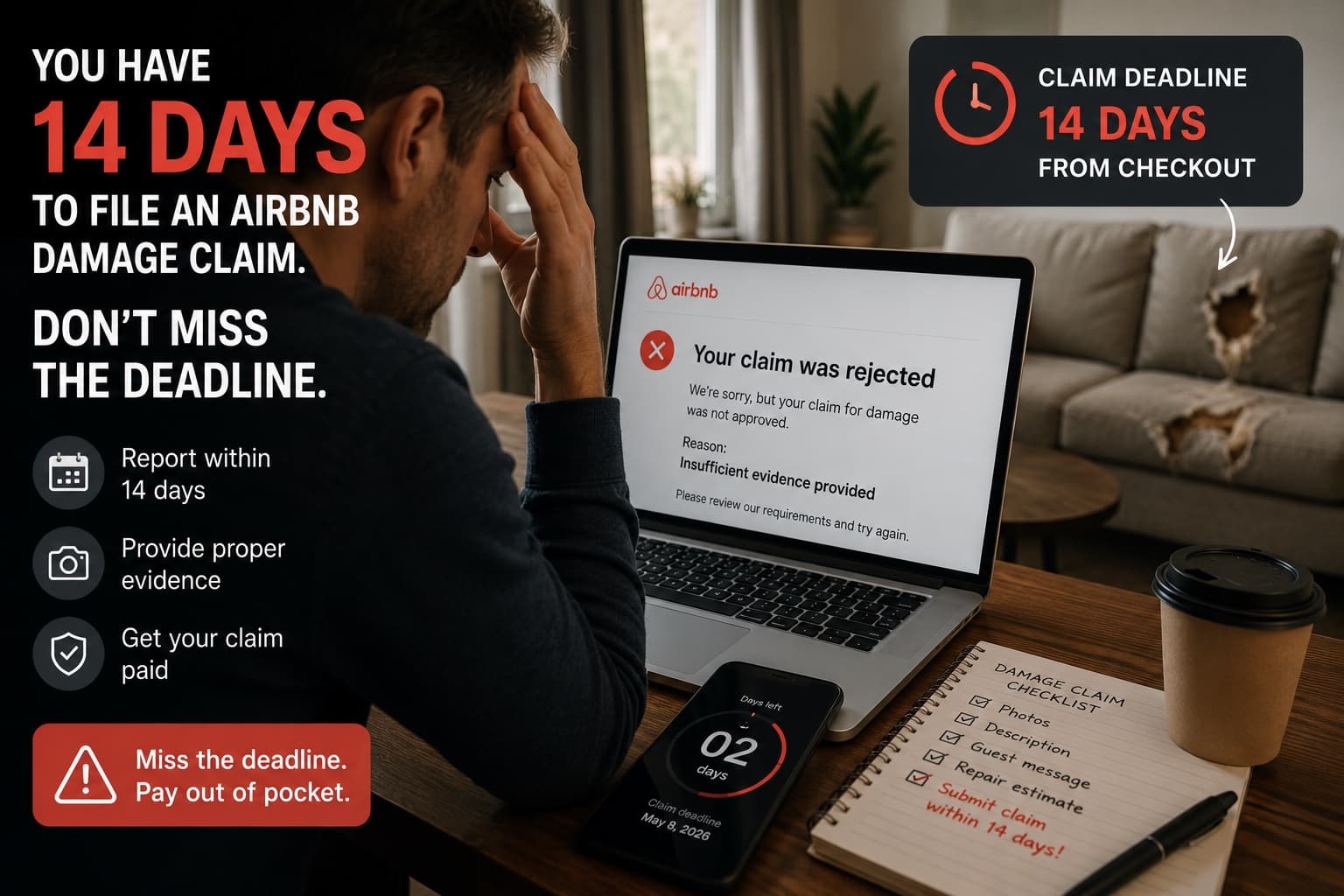
This is what most hosts encounter. A damage claim submitted to AirCover, rejected with the reason "insufficient evidence provided." The 14-day window has closed. The guest has moved on. The money comes out of your pocket.
The rejection is rarely because the damage did not happen. It is because the evidence did not meet the standard Airbnb requires to override a guest's denial.
What AirCover actually covers, and what it does not
AirCover Host provides up to $3 million in damage protection for covered losses. That number is real. But the conditions attached to it are what most hosts overlook until they file a claim.
To have an AirCover claim accepted, you generally need to show:
- The damage occurred during the specific guest's stay, not before
- The item was in good condition before the guest arrived
- The guest caused the damage, not normal wear and tear
- You attempted to resolve the issue with the guest first through the Resolution Centre
- You filed within 14 days of checkout or before the next guest checked in
Each of these requirements is a potential rejection point. The most common one is the first two: proving the damage happened during this stay, and proving the item was undamaged beforehand.
A phone photo taken after the damage appeared proves neither of those things. It shows the current state. It says nothing about before.
The real protection gap AirCover does not fill
The security deposit gave hosts a financial buffer that existed regardless of evidence quality. AirCover gives hosts a potential reimbursement that depends entirely on evidence quality.
That shift changes what protection actually means for a host. You are no longer holding money as insurance. You are building a case. And a case requires evidence that can withstand scrutiny, not just photos that show damage exists.
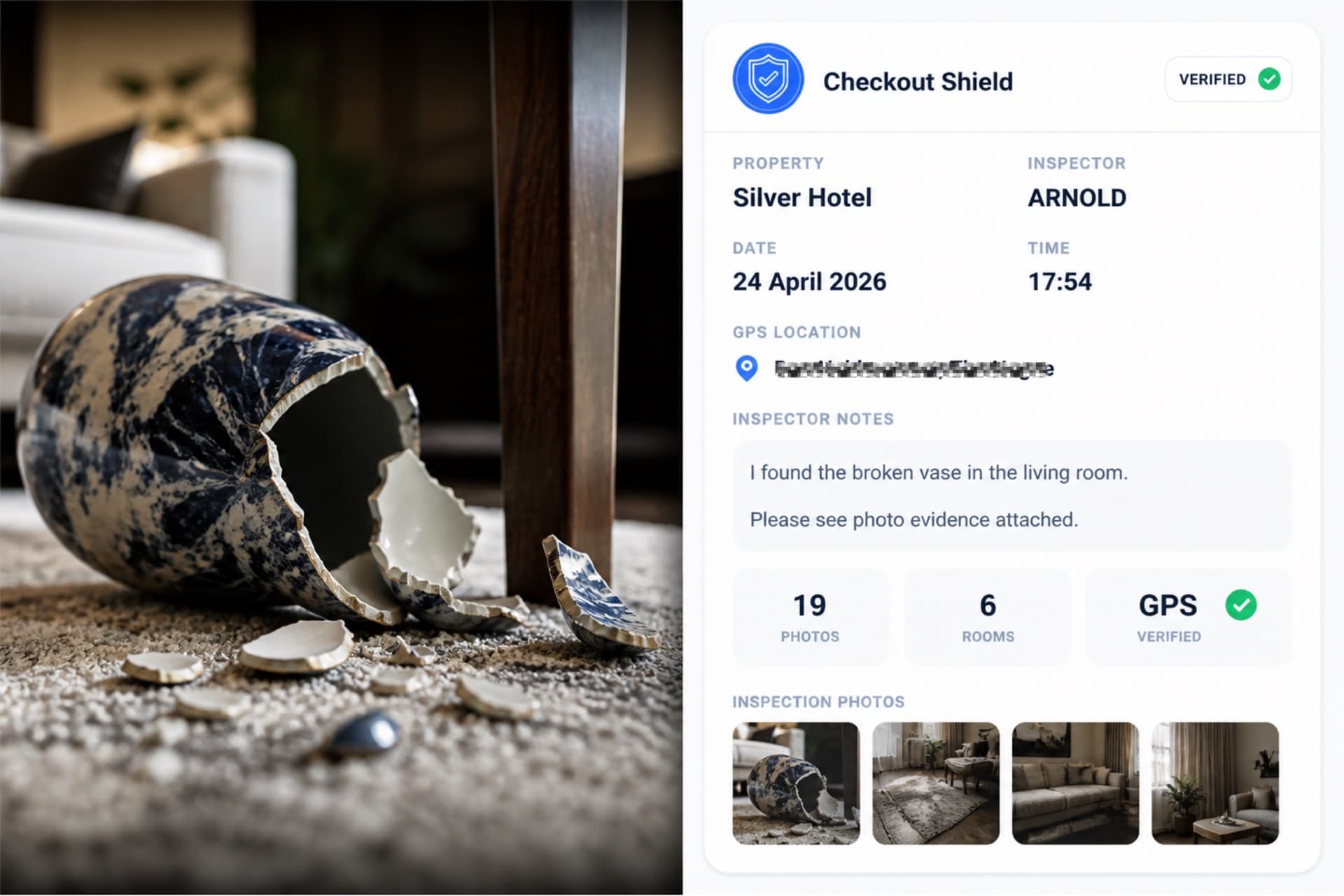
The difference between a rejected claim and an accepted one is almost always the before-and-after comparison. A checkout inspection report that shows the vase intact at 14:00, followed by a damage report showing it broken at 11:00 the next morning, gives Airbnb everything they need to approve the claim. There is no window for the guest to argue it was pre-existing.
What hosts are doing instead of relying on AirCover alone
Hosts who consistently recover damage costs have adapted to the evidence-based model. They do not wait for damage to appear before thinking about proof. They create a verifiable record at every checkout as part of their standard process.
Inspection platforms that generate GPS-verified, timestamped reports give hosts the kind of evidence that AirCover reviewers can verify independently. The location is locked at the time of capture, the timestamp is stored server-side and cannot be edited, and the report generates a public link that anyone can check without needing an account.
This is not a workaround for AirCover. It is what makes AirCover work. The guarantee is there. The evidence requirement is the gap that needs to be closed before the claim is filed, not after.
For more on what evidence Airbnb accepts, read the AirCover evidence checklist and how the 14-day claim deadline works. To estimate your personal exposure without a security deposit buffer, try the free Airbnb damage risk calculator.
AirCover is there. The evidence is your job.
Checkout Shield creates GPS-verified, timestamped inspection reports at every checkout. When a claim comes up, the before-and-after comparison is already sealed and ready to submit. No scrambling. No rejected claims for insufficient evidence.
Create Your First Verified Report, FreeFree tools for Airbnb hosts
Damage Documentation Score
Most hosts learn their documentation was weak only when a claim is denied. Score your whole workflow in three minutes, find the exact gaps that get claims rejected, and get a prioritized fix plan. Airbnb, Vrbo, and Booking.com.
Get my scoreAirbnb Risk Calculator
Estimate your annual exposure from denied claims and undocumented damage.
Calculate your riskAirCover Claim Strength Checker
Score your damage claim before you submit and see exactly what is missing.
Score my claimAirbnb Evidence Checklist Generator
Personalized evidence checklist by platform, host type, and property zones.
Generate my checklistGuest Damage Cost Estimator
See the real cost of a damage incident, including the part AirCover never repays.
Estimate my real costVA Incident Report Builder
Turn damage you found after checkout into a clear report the owner can act on.
Build the reportGuest Risk Pre-Screener
Score a booking request before you approve it, from behavioural facts only.
Screen this bookingOwner Monthly Statement Builder
Turn one property's month of numbers into a clean statement for the owner.
Build the statement